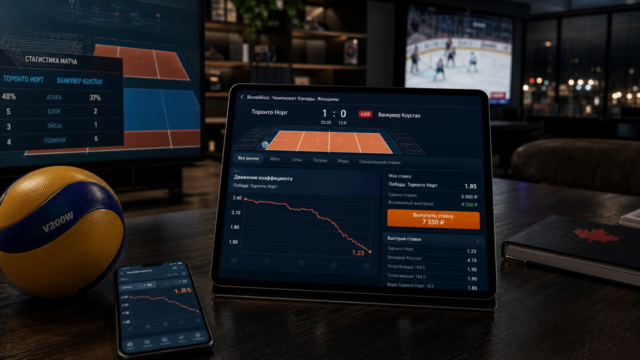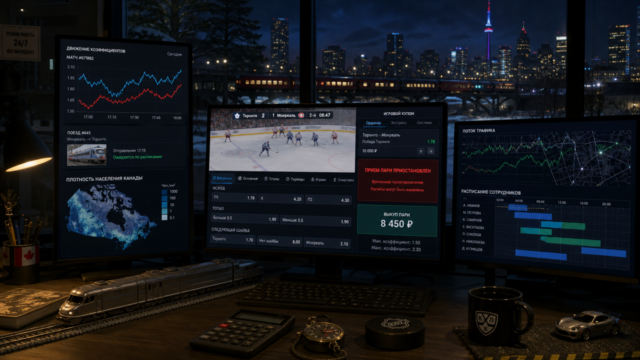
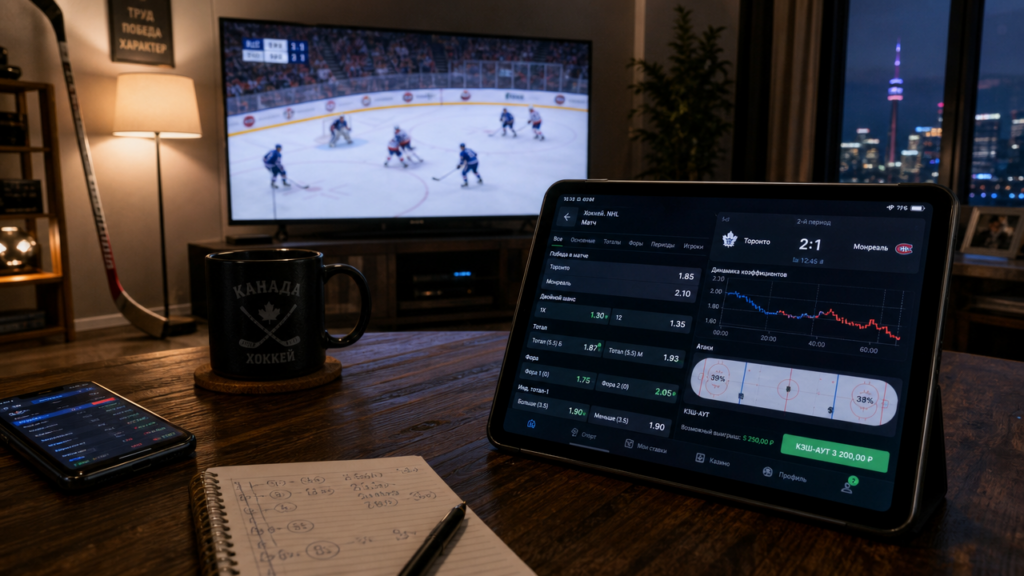
A Toronto power play begins at 9:14 of the second period in a 1-1 game against Montreal. The next-goal market suspends for five seconds. When it reopens, Toronto’s price has moved from 2.35 to 2.10 before a shot is taken. The scoreboard has not changed. This is not a mistake. It is a live bookmaker pricing the shift in scoring probability created by a power play, fatigue, and zone time.
This guide explains the mechanics behind that price move, how live match odds differ from pre-match odds, when a cash-out offer is fair, and how to handle latency in fast markets.
Live odds growth dynamics are pressure, not goals
Live odds growth dynamics describe the direction and speed of price movement as game state changes. A line can shorten without a goal. In a professional hockey game, three shots and two slot chances within 90 seconds can lower a team’s next-goal price from 2.60 to 2.30. The market is not waiting for a goal to happen. It is paying you less because the chance of that goal has risen.
A football example shows the same mechanism. A team that drives from its own 25 to the opponent 40 with three first downs has improved its expected points. The live moneyline may fall from 1.95 to 1.80 even though no score has occurred. The sportsbook model updates after first downs because field position changes the probability of a touchdown or field goal.
Use the event log. If a team has four shot attempts and two offensive-zone faceoffs but its price has not moved, the book may be slow or its model may not rate that team highly. The gap between pressure and price is where a live bettor can find value. That gap closes fast in tight games.
Live match odds differ from pre-match odds
Live match odds are recalculated from the remaining clock, score, possession, player usage, and in-game tactical changes. Pre-match odds are built from lineups, rest, and venue. The two sets can diverge quickly.
An example from a typical professional hockey game:
| Market | Pre-match | Trigger | New live odds |
|---|---|---|---|
| Toronto to win | 2.10 | Toronto scores first, 8:12 left in first | 1.60 |
| Toronto basketball team to win | 2.40 | Toronto goes on a 12-2 run in second quarter | 1.85 |
| Tennis player A | 1.80 | Player A breaks serve in first set | 1.45 |
A pre-match draw at 3.40 can shorten to 2.90 after an away goal in the 23rd minute, because one team now has a time deficit and must chase. The draw price also changes as the remaining time drops. Time decay is not the same as team quality. A 0-0 score at 10 minutes and a 0-0 score at 80 minutes produce very different live match odds.
In-play margins are often wider than pre-match margins. A pre-match market may show 1.90/1.90, and the same live market may show 1.85/1.85 after a few minutes. That wider margin is the cost of trading on events the bookmaker must model instantly. Compare at least two Ontario-regulated betting operators before accepting a live price.
Cash-out: compare the offer to the live market
Cash-out is a price offered by the sportsbook to settle your bet before the final whistle. A $25 bet at 3.20 has a potential return of $80. If your team takes a 1-0 lead in the 55th minute, the book may offer $42 to close the ticket. You need to compare that offer with the current live odds, not with the pre-match price.
The fair cash-out formula is:
Fair cash-out = possible return / current live odds
In the example above, the possible return is $80. If the current live odds for your team to win are 1.80, the fair cash-out is:
80 / 1.80 = 44.44
An offer of $42 is about 5.5 percent below fair value. A gap of 5 to 8 percent is common because the sportsbook builds its own margin into the cash-out number. If the offer is $38, the gap is over 14 percent, which is a poor price for closing the position. You would be better off placing a small hedge on the opposing team at live odds, if the book permits it.
Always compare the cash-out number with the live moneyline. The cash-out quote can lag behind a sharp price move, which creates a brief opportunity if your bet has already gained value. Never take cash-out simply because the button is green.
Fast markets, latency, and suspension
Suspension is a temporary stop in a live market while the sportsbook updates prices after a material event, such as a goal, red card, touchdown, or break of serve. During a suspension, bets are not confirmed. Latency is the delay between the real-world event and the updated price appearing on your screen, plus the delay in your bet confirmation. A slow app can show 1.70 for a tennis point while the book’s internal model has already moved to 1.60.
Fast markets react most often in sports with discrete, high-frequency events. Tennis odds can reprice after every point, basketball after every turnover or foul, and soccer after a corner or shot. In a basketball game, a 10-0 run over 95 seconds can move a live moneyline from 2.05 to 1.70. If you see that run on a delayed stream, the price you tap may be gone before confirmation.
Before placing real money in a fast market, run a price-check cycle. Place a $1 wager on a stable market, note the time between tapping and confirmation, and then watch whether the line re-prices during acceptance. A confirmation of three seconds is workable for soccer but poor for tennis. A confirmation of eight seconds makes most live match odds too stale to trust.
Ontario’s regulated market, launched April 4, 2022, offers several legal live betting operators. Some operators stream tennis and soccer directly in the app, which can reduce latency versus watching a cable feed. The stream may still be delayed, so compare the app clock with a live score source before acting.
A sustainable FFR life in Canadian live betting
I use FFR life to mean a flat-stake, fast-read, rational-exit routine for live betting. The goal is not to press after every miss or chase a goal that the market has already priced. A flat stake keeps your judgment level when a market suspends and reopens at a worse price.
A four-step pre-match routine helps:
- Set a flat stake for any live bet before the game starts.
- Watch one live market for two full sequences before betting.
- Calculate the fair cash-out before accepting any green button.
- Record the confirmation latency and suspension length for your usual book.
If the home team’s next-goal price moves from 2.35 to 2.10 during a power play, that is live odds growth dynamics working in real time. Your job is not to bet after every move, but to know whether the price still offers value compared with the current game state. In fast Canadian markets, the price is not the final answer. It is a model of probability, updated every second, and it can be wrong for a few moments. Those moments are enough if you enter with a flat stake and a clear exit.