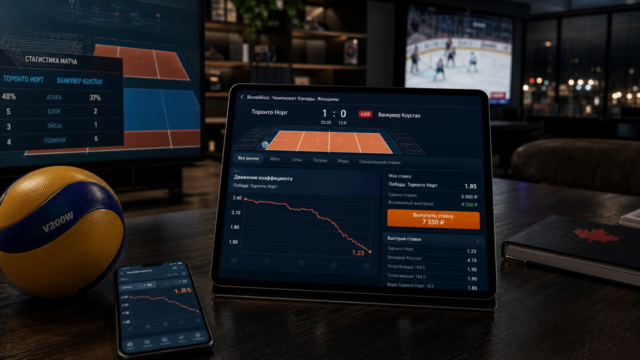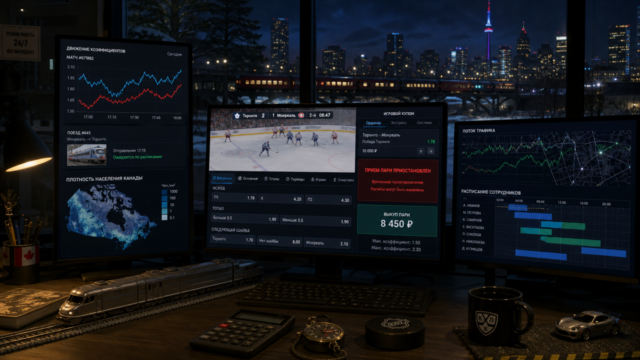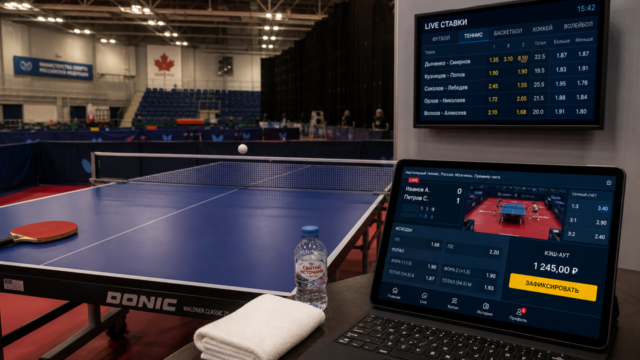
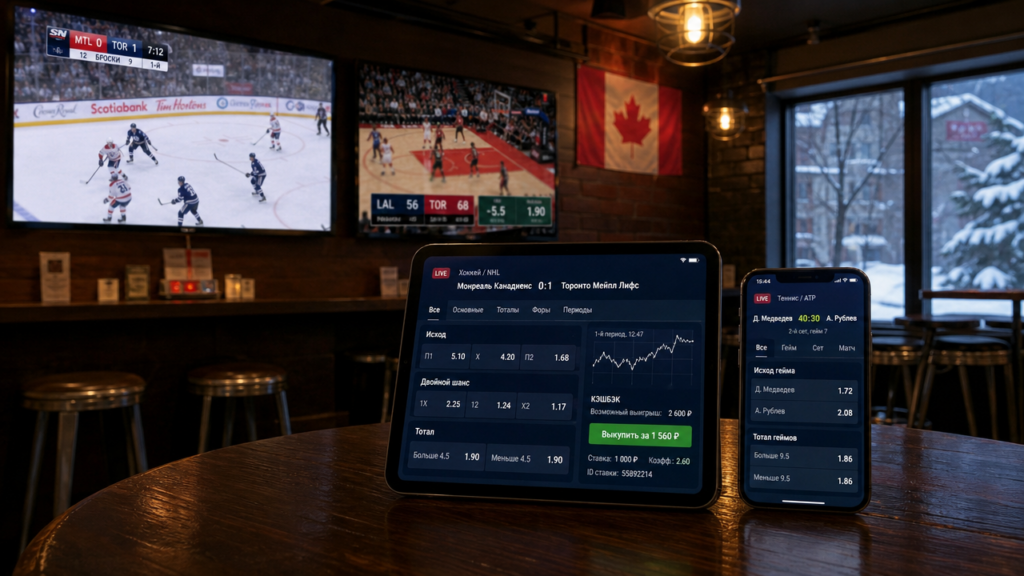
The home team is on a third-period push against the visitors. It has six shots in four minutes, but the score stays 2-2. The home team’s next-goal price drops from 2.60 to 2.35. No goal was scored. The live market moved because the bookmaker is pricing shot volume, zone time, and shift fatigue, not just the scoreboard. If you wait for the goal, you will likely get a lower payout.
Live odds price pressure before the scoreboard changes
A live hockey line can move while the score is still tied. If the home team records four high-danger chances in a row, the next-goal market may cut its price from 2.40 to 2.20. The market is pricing pressure, not only goals. Check whether the move came during a power play or right after a top defensive pair started playing more minutes. That context matters more than the raw shot total.
Tennis is even faster. A break point at 15-40 can move the receiver’s game-win price from 2.10 to 1.85 before the next serve is returned. In basketball, a 12-0 run can shift the live spread from -4.5 to -7.5 inside 90 seconds. These moves happen because live models update after measurable events: shots, points, fouls, faceoffs, corners, and substitutions.
What drives bookmaker odds movements online
The online movement of bookmaker odds is easiest to see with a scanner that compares opening prices with current live prices. A scanner can flag a 55% drop in P2 odds in a lower-league football match. Scanner data alone does not tell you why the price moved, but it helps you find markets where activity is concentrated.
Bookmaker odds movements usually come from four sources: heavy one-sided volume, team news, weather changes, or model-driven sharp money. A football total can move from 47.5 to 44.5 if a wind report shows strong gusts. A hockey moneyline can move if the starting goaltender is scratched shortly before the game. A soccer total can dip if rain makes the pitch slower. Falling odds signal increased interest in that side. Rising odds may offer value, but only if the rise is not caused by a real injury or lineup change.
Suspension, latency, and market friction
Suspension is a temporary market pause. A sportsbook suspends betting during a video review, penalty call, goal-line check, or a dangerous scoring chance. No wagers are accepted until the event resolves. In soccer, a video review can suspend next-goal, 1X2, and totals markets. When the market reopens, the odds have usually moved to a new level. Do not chase the old price after a suspension.
Latency is the delay between the live action, the data feed, and the updated odds on your screen. A slow feed can show odds that are several seconds old. In tennis, that delay can cover two or three points. Before trusting any live bookmaker, submit a small price check and note how long confirmation takes. If the line changes during acceptance, the bookmaker’s latency is too high for that sport.
There is also a physics analogy that helps explain resistance in live markets. A common question is what letter denotes the coefficient of friction during motion. The standard symbol is the Greek letter mu (μ), usually written as μ_k for kinetic friction. Some engineering texts use f. For a car tire on dry asphalt, rolling resistance is about 0.02 and adhesion can reach 0.8. Live betting has its own friction: margin and latency resist fair pricing. A road traffic load factor is actual traffic flow divided by road capacity. When that ratio approaches 1.0, speed falls and the road becomes unstable. A live betting market under sudden one-sided load behaves the same way. The sportsbook may pause the market or widen the margin to reduce exposure.
Cash-out explained with a Canadian example
Cash-out is a price offered to settle your bet before the final whistle. A $20 pre-match wager on the Canadian side to win at 3.00 has a potential return of $60. At the 62nd minute, the side leads 1-0 and the current live odds for it to win are 1.80. A no-margin cash-out would be $60 divided by 1.80, or $33.33.
If the sportsbook offers $31, the missing $2.33 is the bookmaker’s new margin. The cash-out figure rarely equals the full fair value. Before accepting, compare the offer with the current live odds. If you would not place a new bet on that outcome at the current live price, the cash-out may be a poor exit. If the offer is above what your own model says the position is worth, it may be an acceptable way to lock profit.
Fastest live markets and best sports in Canada
| Sport | Key live markets | Event frequency | Why it moves |
|---|---|---|---|
| Tennis | point winner, next game, set betting, total games | every point | point-by-point scoring and fast feeds |
| Basketball | live spread, moneyline, team totals | every possession | runs, fouls, timeouts, and bench rotations |
| Hockey | next goal, live moneyline, total | every shift | possession surges, power plays, and goalie changes |
| Soccer | next goal, corners, cards, 1X2 | every attacking sequence | video reviews, red cards, and substitutions |
In Canadian markets, hockey and basketball can provide some of the fastest live updates when reliable data feeds are available. Tennis can move quickly in major events, while lower-tier matches may have slower data. Soccer is strong for next-goal and corner markets, but suspension periods can be longer during video reviews.
How to time a live bet without chasing noise
Four checks help you time a live bet.
- Watch one full market cycle before wagering. Note whether the odds change during confirmation.
- Set a price threshold before the match. If your model says the home team’s next goal is fair at 2.30, bet only when the live price is 2.50 or higher.
- Use suspensions as a reset. Wait for the market to reopen and compare the new price with your pre-match ceiling.
- Track reverse moves. A price that drops 20% and then rises 15% can signal a false steam move or a buyback, not a reliable signal.
Live odds move on information, volume, and timing. The bettor’s job is to separate a real line move from a delayed or overreacted price.