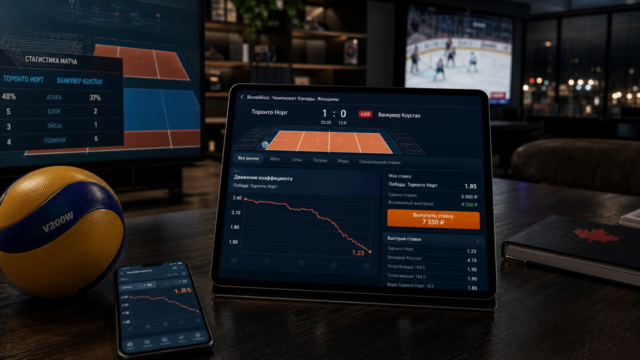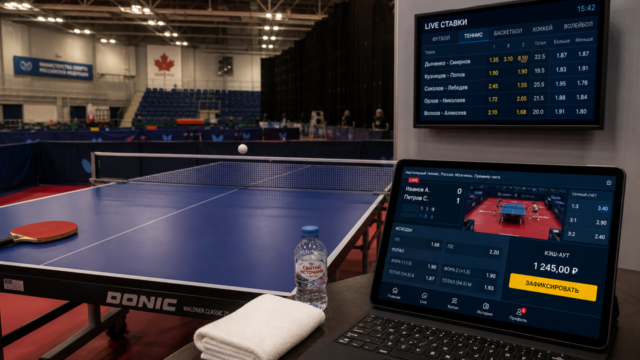
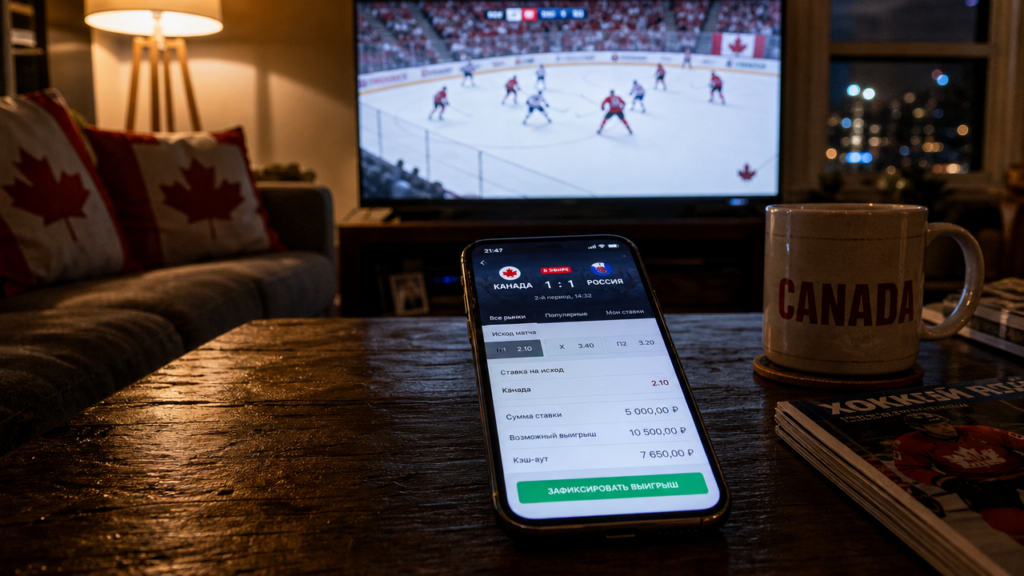
A $20 pre-match wager on a Toronto hockey team at 2.50 has a potential return of $50. It is late in the third period, Toronto leads 3-2, and the opposing team has pulled the goalie. The cash-out button shows $42, while the team’s live moneyline price has fallen from 2.50 to 1.70. You now have to decide whether $42 is a fair settlement or whether the sportsbook is taking too much margin. This guide explains what cash-out is, how live odds drive it, and how Canadian in-play bettors can read fast-moving offers.
What does cash out mean in betting?
Cash-out is an early settlement price offered by a sportsbook. It lets you close a bet before the final whistle, buzzer, or last out. The offer is based on your original stake, original odds, current live odds, and the match situation. It is not a simple refund. If your team is trailing late, a $20 cash-out may be $4.80, not $20. If your team is winning, the same ticket may show $38.60 on a potential $50 return.
The funds usually return to your balance immediately after confirmation and can be used for new bets. Before the event starts, cash-out on a pre-match single often carries a 5 to 10 percent loss because the book is repricing the market and taking margin. A $50 football moneyline ticket may show $45.50 before kickoff even if no player news has changed.
What is cash out in sports betting?
In sports betting, cash-out applies to singles, in-play bets, and accumulators. The offer moves when live odds change. If your team improves, the live odds fall and the cash-out rises. A $25 bet on a Calgary hockey team at 3.20 has a potential return of $80. If Calgary leads 2-0 and the live odds drop to 1.55, the fair estimate is 80 divided by 1.55, or $51.61. A sportsbook may show $47.
If your team struggles, the odds rise and the cash-out falls. With the same $25 bet and Calgary trailing 0-2, live odds may move to 7.50. The fair estimate becomes 80 divided by 7.50, or $10.67. The book may offer $9.20.
In an accumulator, cash-out can remove the final leg after earlier legs have won. A $15 three-leg hockey accumulator at 5.00 has a potential return of $75. If two legs have won and the final game is tied 3-3 in the third period, a cash-out offer of $55 removes the risk of the last leg losing. That is less than $75 but more than zero.
Cash out: what is it in betting?
Cash-out is a bookmaker’s buy-back price, not a separate market price. To estimate fair cash-out, take your potential return and divide it by the current decimal odds for the same selection. The formula is fair cash-out estimate equals stake multiplied by original odds, divided by current odds.
A $40 bet on a Toronto basketball team with a -3.5 handicap at 2.75 has a potential return of $110. At halftime Toronto leads by 14 points and the live odds are 2.00. The fair estimate is 110 divided by 2.00, or $55. A real offer may be $50.50. The missing $4.50 is the bookmaker margin and uncertainty about the second half.
If the live odds move to 4.00 after Toronto loses the lead, the fair estimate becomes 110 divided by 4.00, or $27.50. A book may quote $24.80. Industry calculations often reduce the raw fair value by 5 to 15 percent to protect the sportsbook.
How live odds, suspension, and latency move cash-out
A live hockey line can move before the scoreboard changes. If Toronto controls possession for three straight minutes and records four shots, a bookmaker may cut the next-goal price from 2.40 to 2.20. A related cash-out moves with that price. Check whether the shift came after a power play, because that context matters more than raw shot totals.
Suspension is a temporary pause. The book freezes live betting and cash-out while it reprices after a goal, penalty, turnover, or video review. During a goal review, the cash-out button may disappear temporarily. A sportsbook suspends cash-out to avoid paying a stale price after a major event.
Latency is the delay between the live action and the updated odds. Live markets can have a delay between a point ending and the next price. If a cash-out offer is based on a price from before the last point, it may already be stale. Before accepting, confirm the score, server, and possession.
Comparing a cash-out offer in three markets
| Scenario | Original wager | Current live odds | Fair cash-out estimate | Example offer after margin |
|---|---|---|---|---|
| Calgary team leading 3-1 in the third | $50 at 3.20 | 1.60 | $100.00 | $93.00 |
| Toronto baseball team losing 2-5 in the 7th | $30 at 2.40 | 6.00 | $12.00 | $10.80 |
| Three-leg accumulator, two legs won, final tied | $20 at 6.50 | 1.75 final leg | $74.29 | $68.00 |
The table shows the same principle: the more likely your original bet is to win, the closer cash-out gets to the potential return. A late lead produces a high offer; a large deficit produces a much smaller offer.
Fast cash-outs in Canada: partial, auto, and timing
Some regulated Canadian sportsbooks list cash-out directly in the bet slip and process it immediately when the market is open. A $45 cash-out after a Vancouver hockey team’s goal can confirm quickly when the market is available. If the goal is under review, confirmation may wait until the book reopens the market. This protects the sportsbook from late information.
Some books offer partial cash-out. On a $40 bet at 3.00 with a full cash-out offer of $82, a 50 percent partial cash-out returns $41 and leaves a smaller live position with the remaining stake. This captures profit while keeping some exposure.
Auto cash-out lets you set a threshold. If a $25 bet has a potential return of $75, you can set auto cash-out at $60. The system executes if the offer reaches $60 before the market suspends. This helps on fast markets where a manual tap can miss the price.
Before accepting a cash-out, use these four checks:
- Confirm the current score and clock. The displayed offer can be slow on a fast sequence.
- Find the live odds for the same selection and calculate the fair cash-out estimate.
- Compare the cash-out quote with the fair estimate and note the gap.
- Check whether a suspension is active. If so, wait for the offer to refresh.
A cash-out quote is a buy-back price, not a reward. In a fast Canadian in-play market, compare the offer with the current live odds, account for suspension and latency, and accept only when the bookmaker margin is acceptable. A $55 offer may look attractive, but a $4 gap on every cash-out becomes real money over a season.