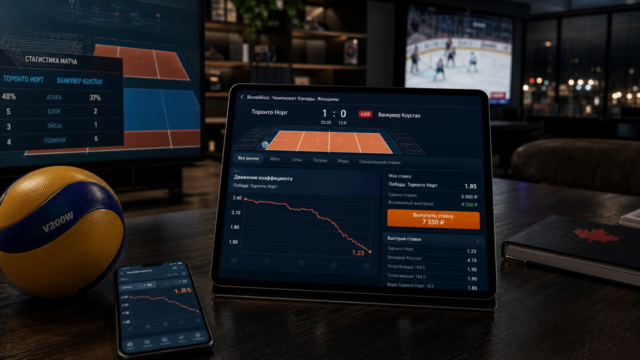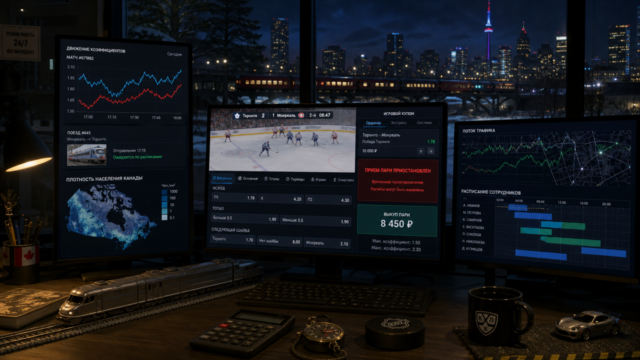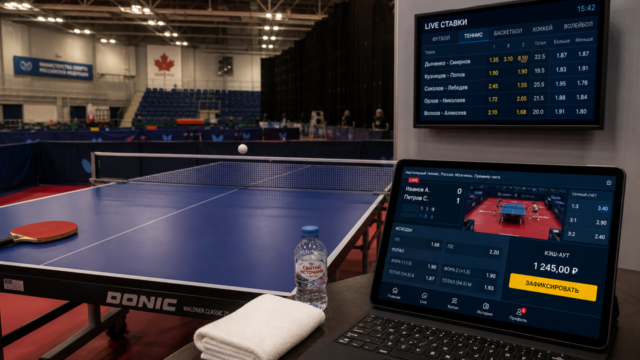
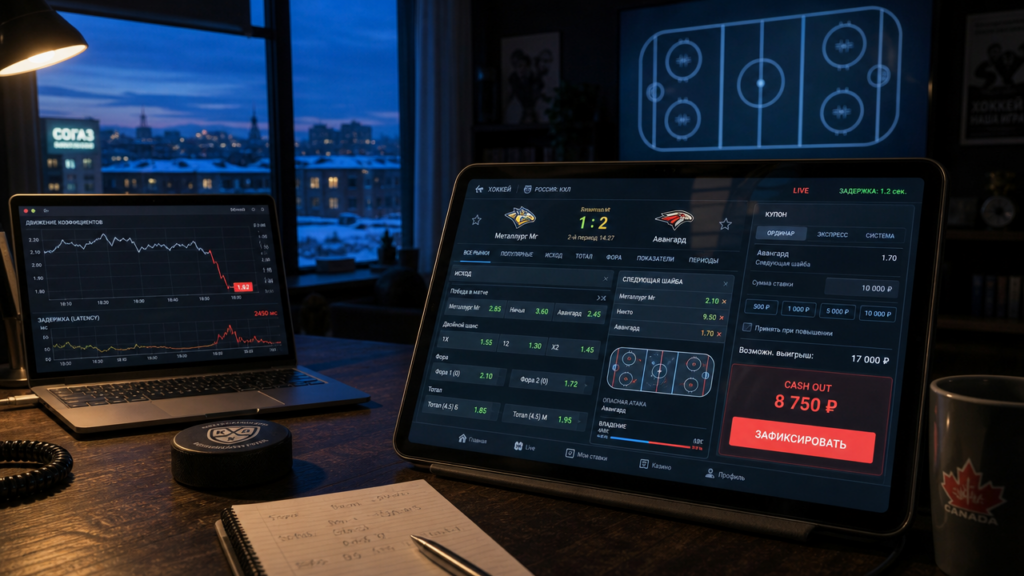
At 7:42 of the second period in a professional hockey game, the visiting team trails 2-1. Over the previous four minutes, its top line has produced several shot attempts and high-danger chances, but the score has not changed. A low-latency betting platform cuts the team’s next-goal odds before the broadcast shows the full sequence again. That is the core live betting secret: in-play prices often move on pressure and game state, not only on goals. This guide explains fast live bets, live hockey betting strategy, AI live sports betting, cash-out mechanics, and quick-moving markets.
The Live Betting Secret: Price Moves Before the Scoreboard
Latency is the time gap between a live event and the odds change on your screen. Suspension is a temporary halt in accepting bets while a betting platform updates a market after a key event, such as a goal, penalty, or video review. In hockey, a shot off the post may not cause a suspension, but it can move next-goal odds within seconds on a fast platform. A goal usually triggers a suspension that may last several seconds. If your app confirms bets slowly, you can lose the price you saw.
Before placing real live bets, run one price check. Open a quiet live market, note the displayed odds, and submit a small wager. If the confirmation takes more than a few seconds and the odds change during acceptance, you are fighting latency. Fast live bets on next-goal or tennis-point markets require a platform that confirms quickly and returns from suspension cleanly.
Fast Live Bets: What Moves and When
The quickest live markets are not always the highest scoring. Tennis odds can refresh after every point, and a hockey next-goal market can reprice after a blocked shot or zone entry. The table below shows four fast live markets and one practical observation for each. These are illustrative examples, not guarantees for every platform.
| Sport | Market update point | Illustrative timing | Fast live bet action |
|---|---|---|---|
| Tennis | After each point | The next-game price may change within seconds after a break point | Confirm small wagers quickly; watch serve and unforced errors |
| Hockey | After a shot, faceoff, or zone entry | A next-goal price may change within several seconds | Check the power play and line matchups before betting |
| Basketball | After a possession change or foul | A live total may move quickly during a scoring run | Live totals move fastest late in the game |
| Soccer | After a corner, shot, or card | A next-goal price may change after a major event | Corners and cards can be more stable than next-goal markets |
The same event can produce different prices across platforms. One platform may return from a goal suspension sooner than another. The shorter suspension gives bettors a faster chance to act on the next line. This difference matters when you are betting a fast live market.
AI Live Sports Betting in Hockey
AI live sports betting tools process more inputs than a viewer can track. A hockey model may use shot location, rush chances, offensive-zone time, power-play status, score state, and goaltender information. Suppose the model identifies similar game states in which a team trails by one late in the game but has created more chances. The model may estimate that team has a stronger chance to score next. If the live next-goal odds imply a lower probability than the model’s estimate, the price may offer value.
That gap does not mean an automatic win. An AI signal is one input, not a bankroll plan. A live hockey betting strategy still needs a platform with low latency and a clear exit. If you wait until the goal is scored, the market may suspend and your entry price may disappear. Use AI output to prepare a specific bet before the shift, then compare the model probability with the live price.
Live Hockey Betting Strategy: Pressure, Power Play, and Score State
A common live hockey mistake is betting the trailing team only because it is due. A better approach is to compare the first two periods with the current next-goal price. Suppose the home team trails 1-0 after two periods. It has created more shot attempts and earned more power-play time than its opponent. If its next-goal price implies a 41.7% probability, while your read of the game and a model suggest a probability closer to 52%, the price may offer value.
When a power play starts in a one-goal game, watch how the platform reopens the market. The strength of the power play, the quality of the opposing penalty kill, and the players on the ice all affect the probability. If the next-goal price does not move before the faceoff, the platform may not have updated the full context. Act only if the price still overstates the probability of the outcome.
Cash-Out: Compare the Offer Before You Accept
Cash-out is a price offered to settle your bet before the final whistle or horn. It is rarely the full fair value. For example, you bet $30 on a team to win at 2.50 before the game, for a potential return of $75. After the team takes a late lead, its live odds move to 1.70, which implies a 58.8% win probability. A simple fair-value estimate would be $75 × 0.588 = $44.10. The platform may offer $40. The difference reflects the platform’s margin and risk adjustment.
Before accepting a cash-out, compare it with the current live odds. If another regulated platform offers the same team at 1.70, you may be able to create a better position with a hedge bet than by accepting a $40 buyout. Cash-out is convenient, but it is a product priced with the platform’s edge.
Quick Live Markets and How to Test a Platform
The quickest live markets depend more on the data feed than on the sport. Regulated operators process live bets within their own systems, but latency and suspension length still vary. A platform with a strong hockey feed may post a next-goal market within seconds of a whistle. A slower platform may need longer. The same difference appears in tennis, where a point can change the next-game price before a slower platform has repriced. For a bettor, the platform’s speed is part of the market.
Run a speed test before betting real money. Choose a live hockey game, wait for a neutral-zone faceoff, and note the time from the whistle to the newly posted odds. Then submit a small price check on the next-goal line. If the confirmation is quick and the price remains stable, the platform may be suitable for fast live bets. If the line changes during acceptance, use that platform for slower markets only. The test shows whether your live betting secret is an edge or simply a delay.