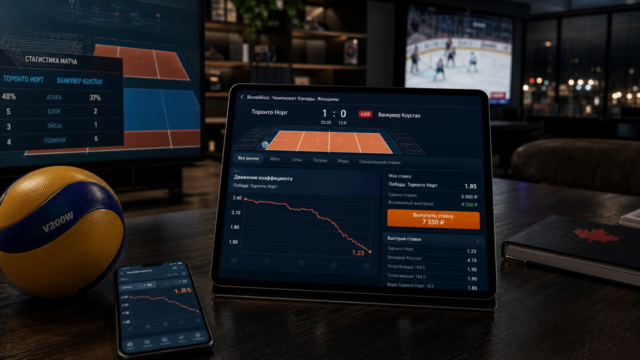

Imagine a hockey game in the second period. The home side leads 2-1 and has produced four high-danger chances in 3:10 without scoring. The next-goal price moves from 2.30 to 2.05. The scoreboard has not changed, but the market has. That is the core of live betting: prices respond to pressure before results show up.
Live betting is less forgiving than pre-match wagering. A 2-second delay on a basketball total can turn a 230.5 line into 232.5 before acceptance. Live bets from different sports behave differently: tennis requires point-by-point speed, while hockey can give you a short window to decide. This guide explains how those moves work, when a cash-out offer is worth taking, and which Canadian markets reward fast, calm decisions.
What moves an in-play line
A betting platform does not wait for the score to change. Its trading model recalculates win probability after events that may not appear on the scoreboard: a hockey power play, a basketball timeout that rests a starter, a soccer red card, or a tennis break point. The market is pricing expected goals or points, not just the current result.
Consider a 0-0 soccer match at minute 60. A home team with 12 shots and 6 corners may be priced at 1.95 to win, while the away team with 2 shots sits at 4.20. If the away goalkeeper makes two difficult saves in one minute, the home price may shorten to 1.80 even though the score is still 0-0. The saves can increase the home team’s expected scoring rate, so the market lowers its payout.
Suspension and latency: the two speed limits
A suspension is a short freeze on a market. The betting platform pauses new bets while it updates the price, usually after a goal, penalty, major injury, or server break. When a suspension ends, the new price may be very different from the one on your screen.
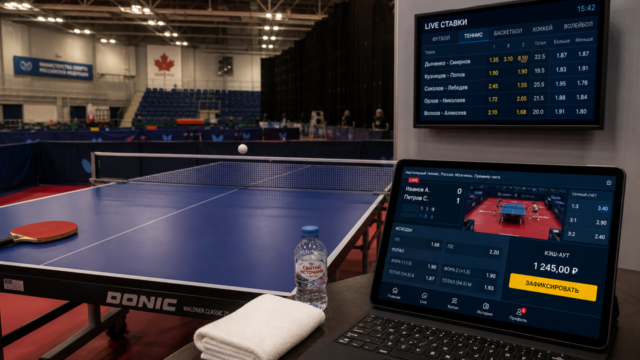
Latency is the delay between the live data feed and the odds you see. On a tennis point, a 4-second latency means you are looking at a point that happened before the server’s next ball toss. That delay can turn a strong price into a losing bet. Before betting on a fast market, place a $1 test bet and count the seconds until it is accepted.
Fastest live markets in Canada
Not all live markets move at the same speed. Tennis refreshes after every point, basketball after possessions, fouls, and timeouts, soccer after shots, corners, goals, and cards, and hockey after shots, power plays, and goalie pulls. Use the table to compare typical moves.
| Sport | Common update trigger | Example price move | Best use |
|---|---|---|---|
| Tennis | Every point | A break-point conversion can move set odds 15-25% | Quick, small decisions |
| Basketball | Possession, foul, timeout | A 6-0 run can move a live spread 2-3 points | Totals and spreads |
| Soccer | Shot, corner, goal, card | A red card can move a favourite from 2.10 to 1.75 | Match odds and next goal |
| Hockey | Shot, power play, goalie pull | A 5-on-3 power play can drop next-goal odds from 2.20 to 1.65 | Next goal and team totals |
The fastest market is not always the best. A tennis market with a 5-second confirmation delay will erase your edge before the bet lands. Test the market before using real money.
When to cash out
Cash-out is a price offered to settle your bet before the final whistle. A $25 bet at 3.20 pays $80. If your team leads 1-0 in the 70th minute and the current odds for the same outcome are 1.80, the fair value is $80 / 1.80 = $44.44. A betting-platform offer of $41 contains a 7.7% margin. The cash-out figure contains the platform’s margin, so it is rarely full fair value.
That does not mean cash-out is always wrong. Taking $41 on a $25 bet locks a $16 profit and removes the risk of a late equalizer. The key is comparing the offer with the current live odds. If the offer is close to fair value and the match flow is turning against you, cashing out is reasonable. If the offer is far below fair value and your team is still generating chances, staying in the bet may be better.
Four timing errors that cost money
Four timing errors can damage a live betting process. Use this table to spot them before they hurt your bankroll.
| Timing error | Signal | Fix |
|---|---|---|
| Slow confirmation | Accepted time takes 4+ seconds | Test with a $1 tennis bet |
| Weak wireless or mobile data | Odds freeze and then jump | Use a stable connection |
| Watching video only | You react after the feed | Open live statistics beside the stream |
| Chasing after suspension | You take a worse new price | Note the old price and compare |
Each error is a leak in your live betting process. A slow confirmation can turn a 2.20 price into 2.00. A weak connection can make you see a goal after the market has already suspended. A reaction delay can push you into a bet the market no longer supports.
Canadian betting-platform features that matter
Registration is commonly required before placing live bets, and age or identity checks may apply. Check the rules for your location before opening an account. Registration alone does not guarantee fast markets, so test each platform yourself.
Check three features before depositing: confirmation time, suspension transparency, and cash-out availability. A good live betting platform shows a suspended banner for a few seconds, then a new price. A poor one rejects your bet after a 5-second delay without explanation. For Canadian bettors, the best live experience combines fast confirmation with clear suspension messages and a cash-out button that updates in real time.
A simple bankroll rule for live bets
Live betting creates more decisions per hour than pre-match betting. A $10 unit in a tennis match can become 10 bets across 20 minutes. Use 1-2% of your bankroll per live wager, and cap concurrent in-play exposure at 10%. For a $500 bankroll, that means $5-$10 per bet and no more than $50 at risk across live events.
Before your next live session, run a speed test on one tennis match. Place a $1 bet, time confirmation to the second, and watch whether the line changes during acceptance. Then test a cash-out offer on a hockey or soccer match by comparing it with the current live odds. These two checks will show you which Canadian platform handles live markets well.